
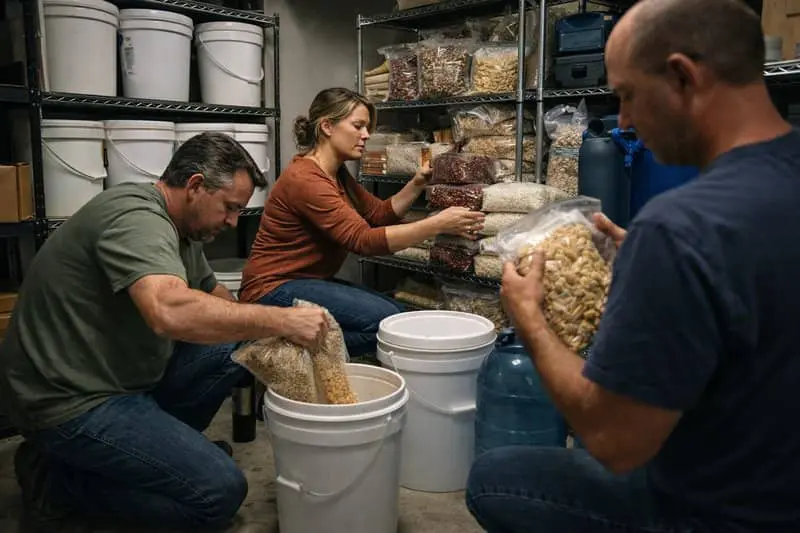
You know you need food in an emergency, and you’re all for keeping a box of protein bars at the ready, but anything more may sound like a little too much. You may lack the know-how to start a long-term food supply and the space to store it.
But stay with us. A 25-year emergency food supply is one of the most dependable ways to ensure you’re ready for anything. We’re not talking about storing enough meals to last you for 25 years, but we are talking about creating a robust food storage system (a few months to one year) that can get you through the hard times and stay edible for 25 years.
Preparing this food storage is more straightforward than you may think. Let’s dive in.
Why You Need Long-Term Food Storage
You never know when a crisis will disrupt your access to groceries.
Natural disasters, power outages, economic instability, and global events can all make it hard to find or afford food. A long-term food supply is your safeguard against these events.
Instead of scrambling during shortages or paying premium prices during panics, you’ll have what you need within arm’s reach.
Think of it like insurance. You hope not to need it, but when the time comes, you’ll be thankful it’s there. And unlike perishable pantry items, a long-lasting food supply is designed to stay edible with minimal maintenance.
Start With the Right Foundation
You want food that lasts, so you’ll need to go a bit beyond your usual grocery staples.
Freeze-dried and dehydrated meals are the gold standard for shelf life. They’re lightweight, compact, and retain nutrients for decades when stored properly. You’ll find options like rice, beans, pasta, fruits, vegetables, and complete meals, all in sealed containers that stack and store easily.
Be sure to consider caloric intake. Adults generally need 2,000–2,500 calories a day. Multiply that by 365 days and then by the number of people in your household. That’s your target supply volume for just one year of emergency food supply.
Don’t guess. Build based on real daily needs so you can sustain your energy in an actual emergency.
Prioritize Variety and Nutritional Balance
Survival doesn’t mean suffering through boring, bland meals. You’ll want a mix of carbohydrates, proteins, and fats to keep your diet healthy and interesting. Include staples like rice and pasta for energy, beans and lentils for protein, and powdered milk or nut butters for healthy fats.
Supplement your shelter supplies with freeze-dried fruits and vegetables to round out your meals with vitamins and fiber. Think about your family’s dietary needs and preferences, too. If someone is gluten-free or vegetarian, make sure your supply reflects that.
A well-rounded stockpile is about sustainability, enjoyment, and nutrition, as well as calorie counting.
Store Smartly
Even the best food won’t last if you don’t store it properly.
Keep your supply in a cool, dry, dark place. Avoid temperature fluctuations, humidity, and direct sunlight, as they can compromise the shelf life of your food. Places like basements, closets, and climate-controlled storage are ideal.
Label everything clearly and use a system to rotate supplies if you’re integrating shorter-term items. Getting yourself organized now prevents confusion later and makes sure everything you’ve stored is still functional.
You’ll also want to keep an updated inventory list so you know exactly what you have without opening containers or guessing.
Account for Water and Cooking Needs
If you can’t survive without food, you really can’t survive without water.
Factor in at least one gallon of water per person per day for up to two weeks. This is not just for drinking but also for meal prep and sanitation. Beyond that, invest in a water filtration system. This lets you use rainwater or even river water for drinking in an emergency.
You’ll also need a way to cook. A propane stove, solar oven, or portable biomass stove can all provide heat without relying on the grid. Make sure to store extra fuel. And give that cooking device a warm-up round before things get tense. If you practice using everything in advance, you’ll know you can feed and warm everyone in the throes of a real emergency.
Build in Phases, Not All at Once
You don’t have to complete your entire food supply in one shopping trip. That would be an expensive and impractical way to set up your supply system.
Start with a one-month goal, then expand to three months, six months, one year, and beyond. Each smaller step gets you closer to long-term readiness.
This phased approach also spreads out your financial investment and gives you room to make adjustments as you learn what works best for your storage space and your family’s needs.
Use each milestone to evaluate your setup. Are you storing efficiently? Is your nutrition balanced? Have your family’s needs changed?
What if I Don’t Have Enough Storage Space?
Long-term storage may sound like a great idea, but what if you’re living in an apartment or small home? Can you really make room for months of meals? The answer can be yes…if you get creative. Here are some tips:
- Store items vertically using wall-mounted shelves, over-the-door organizers, or stackable containers. This makes use of height rather than floor space.
- Use under-bed storage bins for bulk items or canned goods you don’t need to access daily.
- Leverage unused spaces like the top of cabinets, inside closets, or even under furniture where you can tuck flat storage containers.
- Use the back of pantry doors or cabinet doors with hanging racks for spices, snacks, or smaller items.
- Invest in slim rolling carts that can fit in narrow gaps between appliances or be tucked away when not needed.
- Reduce space needs by packing dry goods like rice, beans, or flour in vacuum-sealed bags.
- Consider purchasing furniture that doubles as storage, like ottomans or benches with hollow interiors, where you can keep extra supplies.
Be resourceful with every available inch and think three-dimensionally rather than just looking for obvious cabinet or counter space.
Confidence Through Consistency
When you create a long-lasting emergency food supply, you can take control of your future. When you know your family is covered, you move through life with more confidence, whatever the headlines say.
Start today with what you can. One container of rice. A few cans of beans. A bucket of freeze-dried meals. Every addition matters. The real power lies in consistency.
Stay focused, stay organized, and stay ready.