
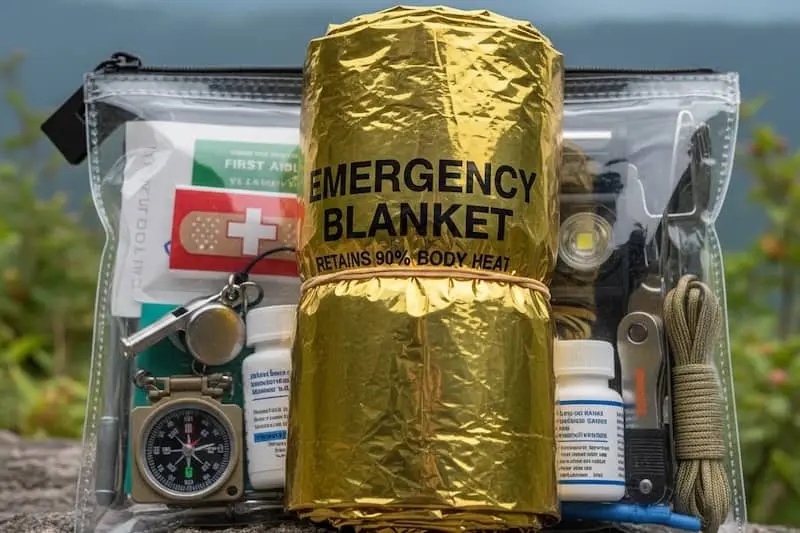
When you build a personal survival kit, think beyond food, water, and a flashlight. Give emergency blankets equal priority in your packing. This often overlooked item can literally save your life. You use tools to find help, but an emergency blanket helps you survive long enough to use them.
You may have seen emergency blankets packed in first aid kits or given out in disaster relief efforts. Their shiny, foil-like look isn’t impressive, but their function is critical. When temperatures drop or you face harsh elements, staying warm is your top priority for survival.
That’s where these thermal blankets come in. They reflect your body heat back toward you, helping you conserve warmth that you’d otherwise lose to the environment.
The Science Behind Emergency Blankets
Emergency blankets are typically made of a thin layer of plastic coated with a metallic reflecting agent, such as aluminum. This material works by reflecting up to 90% of your body heat back to you, reducing heat loss through radiation. That may not sound exciting, but in cold conditions or medical emergencies, heat retention is everything.
Imagine you’re out hiking and the weather shifts. Rain moves in unexpectedly, temperatures plummet, and you’re still an hour away from shelter. Wrapping yourself in an emergency blanket can help stave off hypothermia. The same applies if you’re in a car that breaks down in winter or find yourself lost while camping. In these scenarios, staying warm means surviving.
Emergency blankets are not just for extreme cold; they actively defend you against evaporative and convective heat loss in any wet or windy condition. Wet clothes can drain your body heat at an alarming rate. A thermal blanket creates a barrier that slows heat loss and keeps you drier, giving you a real advantage. Even if temperatures aren’t freezing, wind and moisture challenge your safety, and having one emergency blanket can tip the odds in your favor.
This blanket is an essential emergency item; it takes up very little space but is indispensable in so many situations.
Expect the Unexpected
Emergencies happen to everyone, whether it be in the form of a natural disaster, car accident, or hiking adventure gone wrong. If you spend time outdoors or commute long distances, always pack an emergency blanket for added protection. It is smaller than a paperback and fits easily in a backpack, glove compartment, or coat pocket.
In disaster situations, like earthquakes or hurricanes, emergency blankets are often used in shelters to keep people warm when heating systems are offline. Don’t risk being unprepared; take charge of your safety by carrying your own emergency blanket, so you can protect yourself immediately.
Emergency blankets also help to manage shock. Injury or trauma can disrupt your body’s ability to regulate temperature. Wrap yourself or another person in a thermal blanket to stabilize core temperature until help arrives. That’s why emergency responders always have them ready.
Emergency Blankets: Versatile Tools
While emergency blankets are primarily designed for heat retention, they also serve other creative survival functions. You can use one as a waterproof barrier on the ground to keep your sleeping area dry. You can also turn it into a makeshift rain poncho, windbreaker, or sunshade. Its reflective surface even makes it useful for signaling, which is critical if you’re lost or stranded and trying to attract attention from rescuers.
In hot conditions, emergency blankets can deflect sunlight away from your shelter, helping you stay cooler. If you’re creating a survival shelter from branches or tarps, you can add the reflective layer on top to help moderate the interior temperature. This adaptability is what makes these blankets such a smart addition to your personal survival kit.
Some people even carry multiple emergency blankets: one for warmth, one for shelter, and one reserved for signaling or medical use. At only a few ounces each, it’s not a burden to pack more than one. Whether you’re planning a backwoods trek, preparing a bug-out bag, or assembling a car emergency kit box, this item punches far above its weight.
Blankets for Everyday Scenarios
You don’t have to be scaling mountains or fleeing disaster zones to benefit from having an emergency blanket. Consider how often road trips involve long stretches without cell signal or access to help. If your car breaks down on a cold night, you can’t always rely on the heater to keep you warm. Having a thermal blanket in your glove box allows you to stay warm while waiting for roadside assistance.
If you’re a parent, keep one in your child’s backpack or sports bag. Children are sensitive to temperature changes, whether on a school trip or waiting after practice. It’s reassuring to know that they have an emergency blanket, which provides extra safety.
These blankets also come in handy during temporary power outages that may strike in winter. Put an emergency blanket with your family’s power outage supplies. That way, rather than scrambling for layers in the dark, you have a convenient source of warmth.
Choosing the Right Emergency Blanket
Not all emergency blankets are created equal. Standard space blankets serve a purpose, but upgraded models deliver reinforced materials, true reusability, and integrated grommets for fast shelter setup. Many use thick, tear-resistant polyethylene that withstands repeated use.
With this range of options, consider your environment and needs. In colder regions, opt for a two-person blanket or one with a fleece lining for added insulation. For hiking or travel, opt for a compact and lightweight model. Brands typically package them in zippered pouches or resealable bags to keep them clean and ready to use.
No matter the type you choose, make sure it’s durable, properly sealed, and accessible in a hurry. If your blanket is buried at the bottom of your gear or packed too tightly to unfold with cold fingers, it won’t be as useful when you need it most.
A Small Addition That Delivers Big Protection
In the world of survival gear, it’s tempting to focus on tools or high-tech gadgets. But sometimes the simplest items are the most effective. An emergency blanket is one of the best investments in your personal kit. For just a few dollars and a tiny slice of packing space, you gain life-saving protection against hypothermia, shock, and environmental exposure.
Always pack an emergency blanket, whether you’re an experienced prepper or building your first go-bag. It’s light, reliable, and ready when you need it.