Establishing a one-year emergency food supply doesn’t show fear; instead, it shows foresight. You’re not a fanatic predicting the end of the world. You’re acknowledging that you can be secure in the face of long-term disruptions.
You never know what the future holds. Whether it’s economic instability or natural disasters, having a steady food reserve offers great comfort and a sense of control when everything around you feels uncertain.
A one-year supply doesn’t mean 365 days of identical meals or a closet full of cans. Your system will provide your family with nourishment, variety, and cater to everyone’s dietary needs. Approaching your emergency food supply strategically means you avoid wasting food and money.
Your ultimate goal is to maintain a balanced diet and store and rotate your supplies so that your investment remains fresh.
Step 1: Understand Your Caloric and Nutritional Needs
Before you start buying bulk emergency supplies, calculate what your household actually needs. The average adult requires approximately 2,000 calories per day; however, this number may vary depending on age, activity level, or specific medical needs. Multiply your daily needs by 365 to get a total annual target for each person.
Calories alone don’t make for a healthy food supply. You also need to account for macronutrients, such as proteins, fats, and carbohydrates. A year of nothing but rice and beans will keep you alive, but it won’t keep you thriving.
Include a mix of foods that provide fiber, vitamins, and minerals to maintain energy and immune health over time. Consider including food supplements with stable shelf lives to help, such as multivitamins or protein powders.
You can organize this data using a spreadsheet or a simple notebook. Track how many servings you have of each food group and how long each item will last. That visibility makes it easier to fill gaps, avoid redundancy, and prevent nutritional deficiencies.
Step 2: Choose Foods That Store Well and Rotate Easily
Your emergency food plan should focus on shelf-stable staples with long expiration dates and low moisture content. Consider products like rice, oats, and pasta; legumes such as lentils and chickpeas; canned proteins like tuna, chicken, and beans; and freeze-dried fruits and vegetables. These foods are perfect for your supply because they are easy to store and don’t require refrigeration.
You’ll also want to stock powdered or shelf-stable milk, cooking oils, and seasonings to keep your meals nutritious and palatable. While freeze-dried meals or MRE emergency food offers convenience, they can be expensive and may not suit everyone’s taste or dietary restrictions. If you include them, make sure they’re part of a broader strategy and not the foundation of your supply plan.
Rotation is just as important as storage. You’ll want to eat and replenish items regularly to keep everything fresh and up to date. Implement a “first-in, first-out” system, where you place new items at the back of your shelves and pull from the front. This will keep your supply circulating and reduce waste.
Step 3: Store Your Food Safely and Efficiently
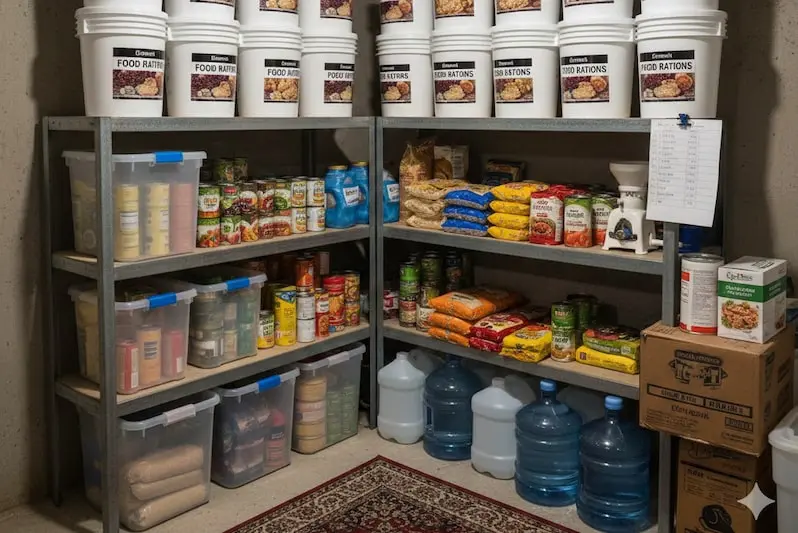
Once you’ve selected the right foods, the next challenge is storing them properly. Light, heat, and moisture are the enemies of long-term food storage. Select a cool, dark, and dry area, such as a basement or closet, with consistent temperatures. Avoid areas near heat sources or those prone to flooding.
Use food-grade storage containers with airtight seals for bulk items, such as flour, rice, or sugar. Mylar bags with oxygen absorbers can extend shelf life for up to 25 years when properly sealed and stored. Clearly label everything with the date of purchase and expiration so you’re never left guessing about freshness.
You don’t need to remodel your house to make room for your supply. Keep items in clearly labeled storage bins under beds or on shelves behind doors. Make a master list of what’s where. The goal is to keep your system organized and accessible. If you can’t see what you have, you’ll forget to use it, and that’s money and produce wasted.
Step 4: Build Gradually and Budget Intelligently
Stocking a one-year food supply doesn’t mean maxing out your credit card in one grocery trip. It’s smarter and more manageable to build your reserve over time.
Start with a one-week supply, then expand to one month, three months, six months, and finally 12 months. This staggered approach helps you learn what your household actually uses, what lasts, and what needs adjusting.
Budgeting is easier when you spread costs over a period of time. Watch for sales, use coupons, and buy in bulk when prices drop. Consider joining a wholesale club or prepping co-op to save on items like dried goods or canned foods. You can also learn to dehydrate and can your own food at home, giving you more control over ingredients and cost.
When you build slowly, you have time to experiment. Try cooking with your stored foods. See which meals work and which fall flat. It’s better to discover that your family hates powdered eggs now than when it’s your only option later.
Step 5: Don’t Forget Water, Cooking, and Tools
Account for water, both for drinking and cooking purposes. The standard recommendation is one gallon per person per day, but for a whole year, that adds up quickly. Water purification tools, filters, and water catchment systems offer longer-term solutions and reduce reliance on plastic bottle storage.
You’ll also need a reliable way to cook. In a power outage or disaster situation, electric stoves may not be an option. Store fuel-efficient cookers, such as propane stoves, near your food supplies so you can still prepare meals without power. Keep extra fuel and backup ignition sources nearby, such as waterproof matches or lighters.
Don’t overlook tools like manual can openers, cookware, utensils, and even mess kits. If your food storage system relies on access to modern conveniences, you may be in for an unpleasant surprise. Prepare for low-tech conditions to make your setup truly sustainable.
Step 6: Tailor the Supply to Your Lifestyle and Preferences
This is your supply and not a generic checklist. It should reflect your dietary needs, cooking habits, and cultural preferences. If you’re a vegetarian, include more legumes and plant-based proteins. If someone in your home has food allergies, ensure you have safe alternatives. If you have a baby, make sure your supply caters to their needs too.
You want to store food that your household will actually want to eat, not just tolerate.
Add variety to avoid palate fatigue. Eating the same thing over and over can lead to poor nutrition and low morale. Include shelf-stable sauces, spices, and comfort foods. Think peanut butter, honey, canned soups, or drink mixes. These small touches can make a huge difference in mental well-being over time.
Finally, track your inventory digitally or on paper. Regularly check product’s expiration dates, rotate your supplies, and update your plan based on what you’ve used or added.
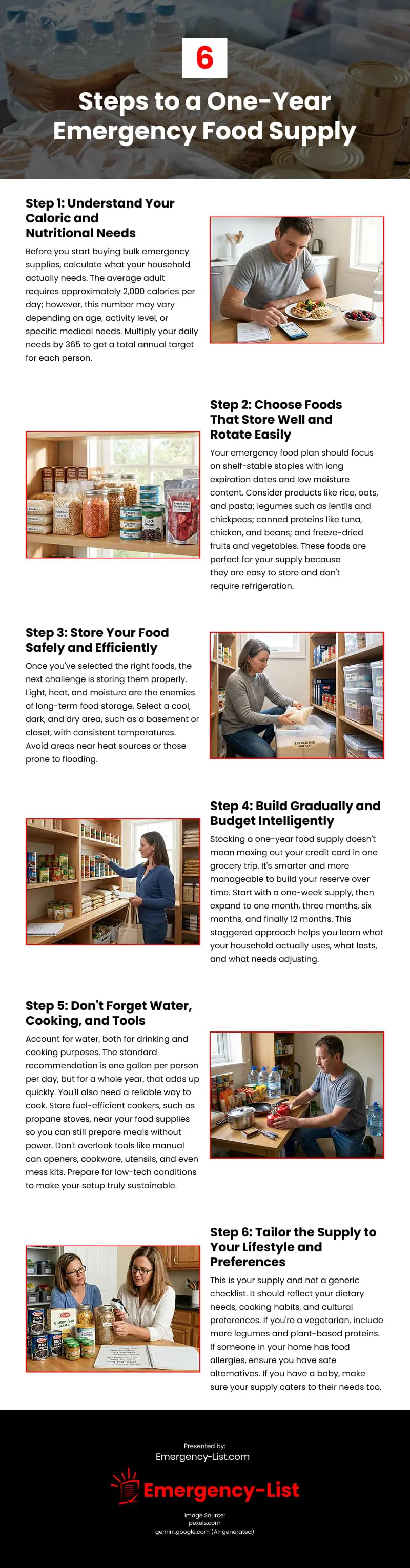
Infographic
Building a one‑year emergency food supply is a smart, proactive way to stay prepared, helping households remain secure during extended disruptions without overspending or wasting resources. This infographic walks you through the key steps to create a reliable yearlong food reserve.