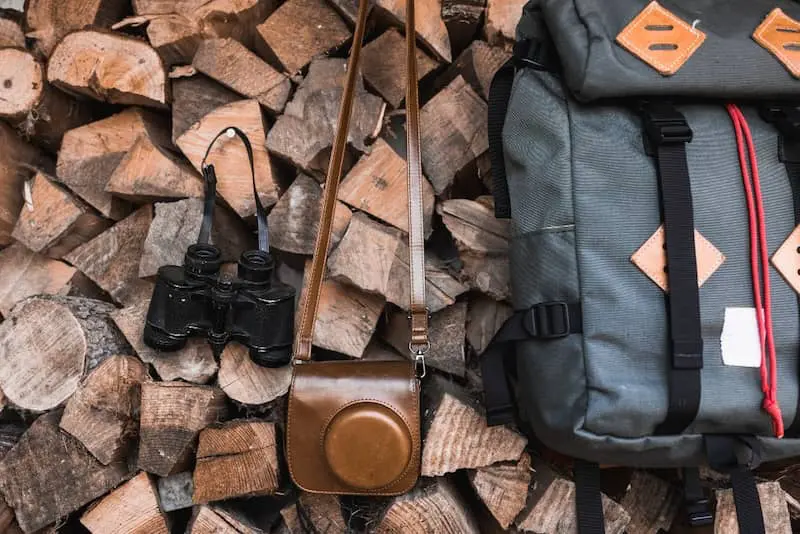
A mini survival kit can look almost too small to matter. You open a tin or pouch and see a few compact items, and it’s easy to assume it’s either a gimmick or a magic solution. The truth sits in the middle. When you understand the purpose of a mini survival kit, you can recognize it as one of the most practical pieces of emergency gear to keep within arm’s reach.
You don’t carry a mini kit to replace your larger supplies. You carry it to buy time, solve minor problems quickly, and stay steady when a situation goes sideways. From a breakdown on a back road to an unplanned night outside, a mini survival kit can prevent an unexpected situation from becoming dangerous when you’re cold, wet, or alone.
What a Mini Survival Kit Is Designed to Do
A mini survival kit is a compact set of tools that supports the basics: warmth, water, light, signaling, and small repairs. The scale matters. You’re not planning to build a long-term shelter with it or feed yourself for a week like you might with disaster emergency supplies. A mini survival kit is to create a margin of safety for the first hour or the first night of an emergency event.
Picture a short hike that turns long when a washed-out trail blocks your path. Or a routine commute where you end up waiting for help in bad weather. In those moments, tiny capabilities add up. A small light helps you see. A fire-starting option helps you warm up or signal. A few medical supplies help you handle a cut before it becomes a bigger problem.
Common Myths
There’s a lot of “lore” surrounding emergency preparedness. Some people go crazy on supplies for some impending doomsday, and some people write off even basic preparedness efforts as “paranoid.”
In the midst of these polarized views, various myths have arisen surrounding survival kits. Here are a few to steer clear of.
Myth 1: “A Mini Survival Kit Is Only for the Wilderness”
It’s common to treat mini kits as backcountry-only gear. But you can get real value from one in everyday settings; everyday problems often share the same core risks.
Darkness, exposure, and delayed help happen in cities and suburbs, too, and a mini survival kit can help you handle them safely and without extra stress.
If your apartment building loses power, a mini kit with a small flashlight, spare batteries, and a way to stay warm keeps you functional. If a storm traps you in a parking lot, a compact blanket and a light can help reduce panic and keep you calm. If your phone dies and you still need to navigate, a basic backup light and a simple signaling tool make a huge difference.
A mini survival kit fits in places your larger kit may never go: your work bag, your purse, a glove box, a coat pocket, a daypack, a stroller pouch. The best kit is the one you actually have with you.
Myth 2: “If I Have a Mini Kit, I’m Covered”
A mini survival kit is not a complete emergency plan. It’s a bridge. If you treat it as your only layer of preparedness, you risk carrying the wrong expectations into a stressful situation.
Think in terms of roles. Your mini kit handles immediate friction with essential emergency items, your larger kit handles sustained needs, and your home supplies handle longer disruptions. When those layers work together, you avoid forcing a tool to do a job it wasn’t designed for.
A good example is water. Many mini kits include purification tablets or a tiny filter straw. That can help in a pinch, especially if you can access a relatively clean source. It should never replace storing water at home or carrying enough water for your activity.
Myth 3: “More Means Better”
Packing a mini survival kit like a clown car usually leads to disappointment.
Overstuffed kits become hard to use and harder to reseal. Because of that, they get sidelined. The better approach is to select a small set of items that work together for immediate needs rather than trying to pack for every scenario you can imagine.
You want tools that perform multiple functions. A compact light that can clip to your clothing helps with navigation and hands-free tasks. A small length of cord helps with repairs, securing gear, or stabilizing a quick shelter. A fire-starting method helps with warmth and signaling. A mini first-aid component helps you keep moving safely after a minor injury.
A kit you can open and use quickly will always beat an overstuffed, overcomplicated one.
Myth 4: “All Mini Kits Are Basically the Same”
Mini survival kits can vary widely. Some are built as novelty gifts and won’t be all that helpful to you. Others are designed with real-world constraints in mind and would be valuable in an emergency.
The easiest way to tell the difference is to look at how useful items would be under stress.
Ask yourself how you’d use it with cold hands, low light, or elevated anxiety. Does the kit include items you know how to operate? Can you access the most critical tools without dumping everything out? Are the components protected from moisture? Does the kit fit where you plan to carry it?
If you’ve ever fumbled for a key in the dark, you already understand the main point. In emergencies, fine motor skills drop. The simpler your tools are, the more likely it is that you’ll be able to use them successfully under stress.
Where Your Mini Survival Kit Shines
Mini survival kits do their best work in short-duration emergencies and “gray area” situations that never make the news. Those are the moments when you still have choices, and a few tools can keep the choices open.
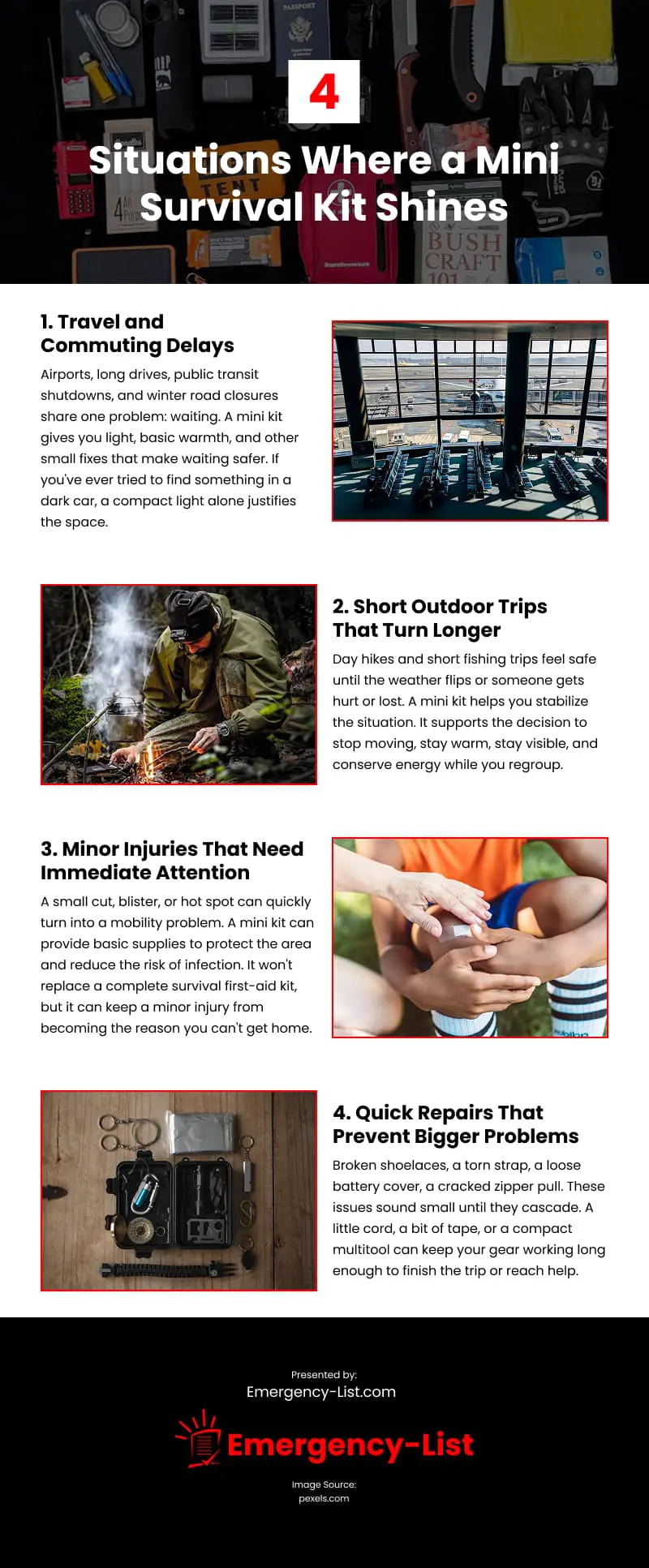
1. Travel and Commuting Delays
Airports, long drives, public transit shutdowns, and winter road closures share one problem: waiting. A mini kit gives you light, basic warmth, and other small fixes that make waiting safer. If you’ve ever tried to find something in a dark car, a compact light alone justifies the space.
2. Short Outdoor Trips That Turn Longer
Day hikes and short fishing trips feel safe until the weather flips or someone gets hurt or lost. A mini kit helps you stabilize the situation. It supports the decision to stop moving, stay warm, stay visible, and conserve energy while you regroup.
3. Minor Injuries That Need Immediate Attention
A small cut, blister, or hot spot can quickly turn into a mobility problem. A mini kit can provide basic supplies to protect the area and reduce the risk of infection. It won’t replace a complete survival first-aid kit, but it can keep a minor injury from becoming the reason you can’t get home.
4. Quick Repairs That Prevent Bigger Problems
Broken shoelaces, a torn strap, a loose battery cover, a cracked zipper pull. These issues sound small until they cascade. A little cord, a bit of tape, or a compact multitool can keep your gear working long enough to finish the trip or reach help.
How to Set Up Your Mini Survival Kit
A mini survival kit works best when it reflects your routines. Start with where you spend time and what tends to go wrong.
If you drive often, prioritize light, warmth, and visibility. Store the kit in your glove box, center console, or door pocket.
If you spend time outdoors, prioritize fire-starting, a basic signaling option, and a way to keep your hands working. Make sure it can fit easily into a backpack.
If you travel for work, include items that fit easily into your briefcase or purse and still solve common problems.
Choose a kit format that opens cleanly and closes securely. You should be able to use it without turning your bag into a scavenger hunt.
A Quick Reality Check
A mini survival kit rewards familiarity. Use it once in a low-stakes moment. Open it in the dark. Try the light. Practice handling the contents with cold fingers. Learn how to arrange the items so you can quickly find what you need.
If you know how everything works and where it all is when you are relaxed and calm, it’s one less unknown thing to handle when you have to open it in an emergency.
Treat Your Mini Survival Kit as a Tool for Life
A mini survival kit earns its place when you treat it like a real-life tool. It helps you handle the first wave of an emergency with less panic and more control. Over time, that mindset spreads. You notice risks earlier. You make smarter choices about where you go and what you carry. You build resilience in small steps, and the benefits show up when you least expect them.
Video
Infographic
Mini survival kits are particularly useful in short-term emergencies and everyday situations where you have options but need small tools to stay safe, comfortable, and in control. Check out this infographic for examples of situations where a mini survival kit proves advantageous.