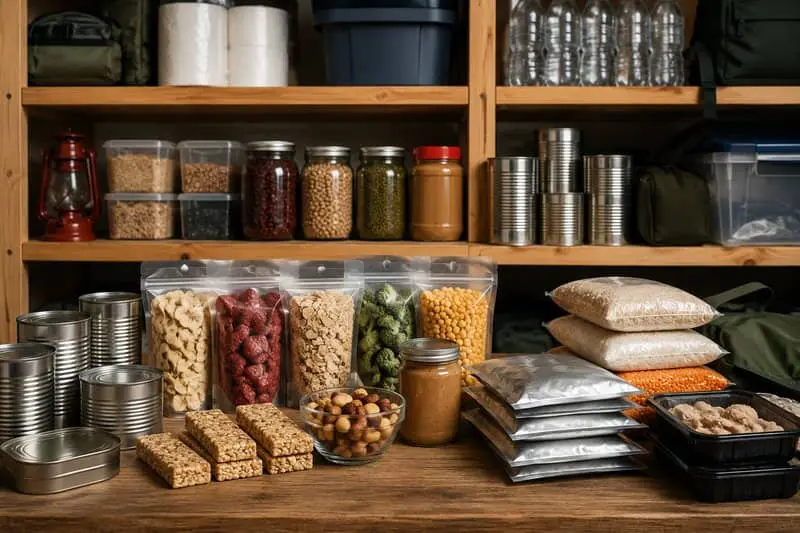
Picture a shelf stocked with canned goods, freeze-dried meals, and energy bars. At first glance, it looks like you’re ready for anything. But will that food supply actually meet your needs when you are relying on it?
When most people start building an emergency food supply, they focus on quantity first and making sure they have enough food to last a set number of days.
That’s an important place to start, but preparedness is more than counting calories. During an extended emergency, your body needs the right balance of nutrients to maintain energy, support your immune system, and stay mentally sharp to make good decisions under stress.
Before you start filling your shelves with emergency food supplies, here are five important ideas to keep in mind.
1. Know How Much Energy You Need
A good rule of thumb is that most adults need about 2,000 calories on average per day. In an emergency, though, you’re often doing much more than usual. Carrying supplies, making repairs, and managing everyday tasks can all increase the amount of energy your body needs.
That’s why it’s smart to include high-calorie foods in your emergency supplies. Items like nuts, nut butters, freeze-dried meats, and emergency food bars provide a lot of energy without taking up much storage space. They also store well, making them a practical choice for long-term preparedness.
One common mistake is filling your food supply with too many simple snack foods that are high in refined carbohydrates. While they have their place, relying on them too heavily can cause quick energy spikes followed by crashes, which isn’t ideal when you need steady energy and clear thinking.
One of our top tips is to compare products by dividing the total calories by the package weight in ounces. Foods with a higher calorie density provide more energy while taking up less shelf space, making your storage more efficient.
2. Incorporate Protein and Fat
Carbohydrates make up a large portion of most emergency food supplies, and for good reason. They’re affordable, provide plenty of calories, and have a long shelf life. But relying on them too heavily can leave you with nutritional gaps.
Protein helps maintain muscle, supports your immune system, and gives your body what it needs to recover from physical activity. Fat provides long-lasting energy, helps your body absorb key vitamins, and keeps you feeling full longer. Even if you’re getting enough calories overall, not having enough protein and healthy fats can leave you feeling tired and running below your best.
Some of the best shelf-stable protein options include freeze-dried meats, canned fish, canned chicken, dried beans and lentils, and powdered eggs. For healthy fats, foods like peanut butter, ghee, coconut oil, and olive oil store well and can add valuable nutrition to everyday meals.
A good goal is to get about half of your daily calories from carbohydrates, around one-quarter from fat, and the remaining calories from protein. That balance provides more steady energy and better overall nutrition during an emergency.
3. Don’t Skip Vitamins and Minerals
This is one area where even well-stocked emergency food supplies often come up short. Even when people plan for enough calories and make sure they have a decent amount of protein, vitamins and minerals are easy to overlook.
Micronutrients play an important role in keeping your immune system strong and helping you stay sharp when you’re under stress. You won’t notice a deficiency overnight, but during an emergency lasting weeks, those nutritional gaps can begin to add up.
Fruits and vegetables that have been freeze-dried maintain much of their original nutrition, and they rehydrate quickly when needed. Canned foods like tomatoes, spinach, and mixed vegetables also provide valuable vitamins and minerals at a low cost. Multivitamins offer another simple, affordable way to help fill any nutritional gaps in your emergency food supply.
The easiest way to cover your nutritional needs is to build variety into your food storage, much like you would when shopping for groceries. A mix of different food types naturally provides a wider range of vitamins and minerals than relying too heavily on any one category.
4. Watch the Sodium in Shelf-Stable Foods
Shelf-stable foods are often high in sodium, and there’s a good reason for that. Salt helps preserve food, extends shelf life, and restores some of the flavor that’s lost during processing and long-term storage. It serves an important purpose, but it can also become a challenge if you rely on your emergency food supply for several days or more.
Too much sodium increases your body’s water needs. During an emergency, when clean water may be limited or harder to access, that can become a real concern. High-sodium diets can also make it more difficult for people managing high blood pressure or kidney conditions. The middle of a crisis isn’t the ideal time to discover that your food supply is creating new problems.
The best approach is to get in the habit of reading labels and comparing products. Even within the same category, sodium levels can vary widely from one brand to another. When you have the option, choose lower-sodium products, and try not to build your entire emergency food supply around foods that are especially high in salt.
5. Rotate Your Food Supply
Most people think about shelf life as a simple safety question: is this food still safe to eat? But food safety and nutritional value aren’t always the same thing.
Over time, vitamins naturally begin to break down, especially water-soluble nutrients like vitamin C and the B vitamins. That means a freeze-dried meal can still be perfectly safe to eat years later, but it provides less nutrition than when it was first packaged. The nutrition label tells you what was in the food when it was made, not necessarily what remains after years in storage.
The easiest way to manage this is by rotating your food supply. Use the oldest items first and replace them with fresh ones, keeping your emergency food supplies as close as possible to their original nutritional value.
Where you store your food matters, too; a cool, dark, dry space helps preserve both quality and nutrients for much longer. Heat speeds up the breakdown process, which is why garages and other places with large temperature swings are usually not the best options for long-term storage.
Build a Supply That Actually Works
Having enough food on hand is important, but the quality of that food matters just as much.
A stockpile built around calories alone can leave important nutritional gaps that become much more noticeable during an extended emergency. When you also think about protein, healthy fats, vitamins and minerals, sodium levels, and proper storage, your emergency food supply becomes something your family can truly depend on when it matters most.
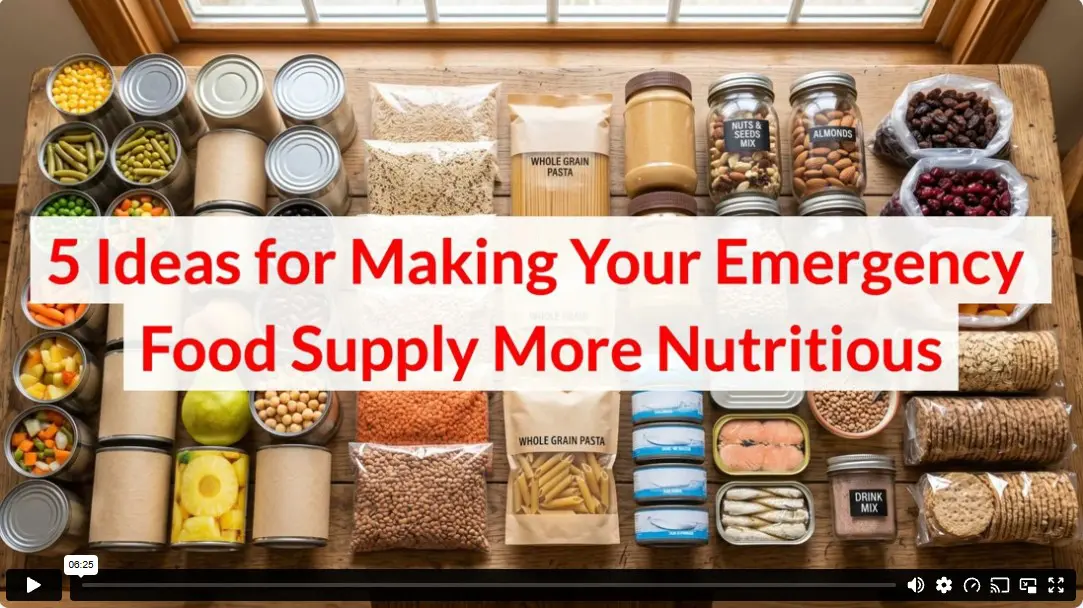
Video
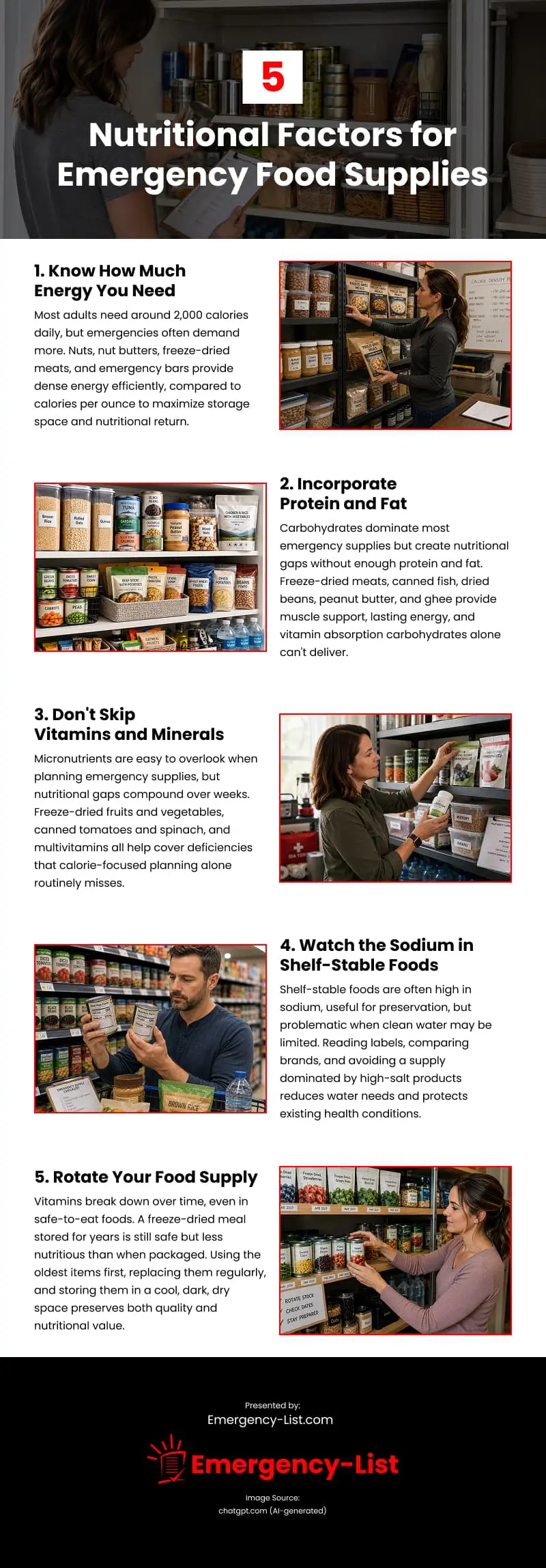
Infographic
Building an emergency food supply around calorie counts alone leaves real nutritional gaps that compound quickly during an extended emergency when your body needs steady energy and clear thinking. Find out nutritional factors for emergency food supplies in this infographic.