When disaster strikes, finding clean water can become a challenge. Your taps may stop running, pipes can break, and floodwater can contaminate local water sources. The water you relied on yesterday may not be safe to drink today.
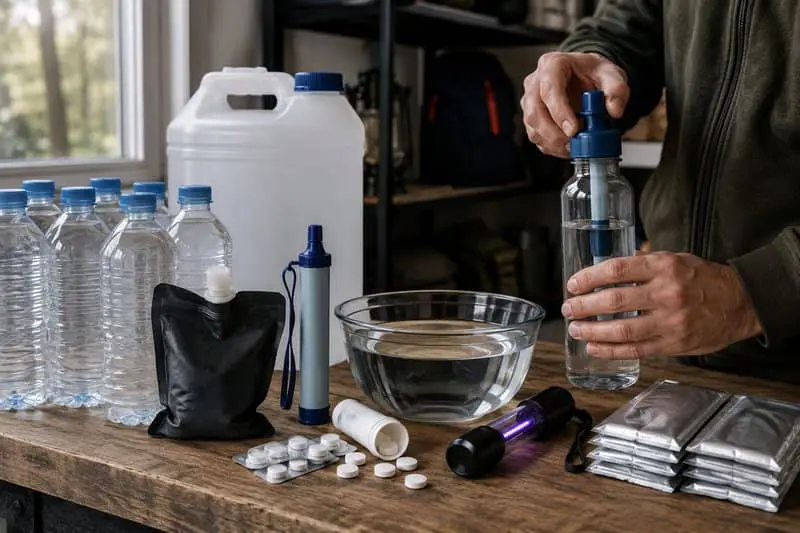
Most people know they should store water before an emergency. Fewer know what to do when that supply starts running low. You have several practical options, from water filter bottles to emergency water packets, and the best choice depends on your situation. This list walks through five options in plain language so you can choose what works best for your household.
Remember, clear water does not mean safe water. Disasters can introduce bacteria, sewage, and chemicals into water supplies. You should always treat water from streams, rivers, or ponds before drinking it. Learn your options now, and you’ll be prepared when you need it, rather than finding out the hard way just what unsafe water is capable of.
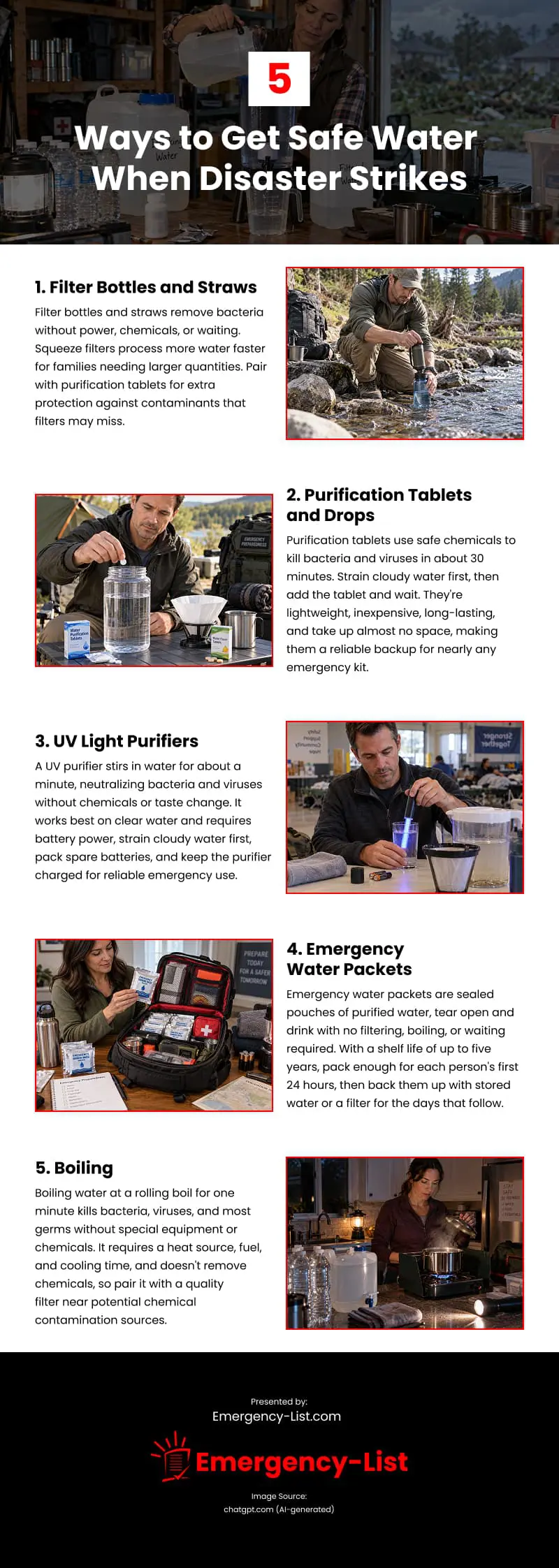
1. Filter Bottles and Straws
A water filter bottle looks like any other water bottle, but it has a built-in filter that removes bacteria and other harmful particles as you drink. You fill it from almost any water source, and the filter cleans the water before it reaches your mouth.
A filter straw works much the same way but keeps things even simpler. Place the straw directly into the water and drink through it. It weighs almost nothing and packs down small, so it’s easy to slip into a go bag or car emergency kit box without taking up valuable space.
Both options work well when you need clean water on the go. They don’t need power, chemicals, or waiting time.
Keep in mind that most basic filters remove bacteria but not viruses. Squeeze filters take things a step further. They force water through the filter rather than relying on suction, process more water at once, and operate faster. They’re a great choice for families who need a large amount of clean water in a hurry.
For extra protection, pair a filter bottle with water purification tablets. The filter removes dirt and particles, while the tablets treat contaminants that the filter may miss.
2. Purification Tablets and Drops
Water purification tablets and drops are small, lightweight, and inexpensive. They use safe chemicals to kill the bacteria and viruses that make water unsafe to drink. Just add one, wait for it to work, and your water will be safe to use.
Most tablets take about 30 minutes to treat water. Cold temperatures or cloudy water can make the process take longer. If the water looks cloudy, strain it through a clean cloth or coffee filter first to remove dirt and debris. Then add the tablet and let it do its job.
The treated water may have a slight chemical taste. Many brands offer follow-up tablets or drops that help improve the flavor after treatment. These take up very little space and make a useful addition to your water survival kit.
Water purification tablets make a reliable backup for almost any emergency kit and are especially useful when other water treatment tools aren’t available. They last a long time, cost very little, and take up almost no room. The biggest downside is the waiting time. But pair them with a faster option, and you’ll have a dependable layered water plan.
3. UV Light Purifiers
A UV water purifier looks like a small pen or wand. You stir it in your water for about a minute, and the UV light neutralizes bacteria and viruses that can make you sick. After that, your water is ready to drink.
You won’t notice any change in taste, you don’t need to add chemicals, and you won’t have to wait long. The biggest drawback of UV water purifiers is power. The purifier runs on external batteries or a rechargeable internal battery, so once it runs out of power, it stops working. That makes it less dependable on its own during a long emergency.
UV purifiers also work best with clear water. Cloudy water can block light and reduce treatment effectiveness. If the water looks dirty, strain it first to help the UV light do its job.
A UV purifier is a useful tool in your emergency kit. Use it after filtering out visible debris, and it works extremely well. Just remember to pack spare batteries or keep the purifier charged.
4. Emergency Water Packets
Emergency water packets are small, sealed pouches filled with purified water. Each packet holds just over 4 ounces. Just tear one open and drink. You don’t need to filter, boil, wait, or set up anything.
These packets are made for grab-and-go situations where every minute counts. They provide clean drinking water during those critical first hours without adding much weight or taking up much space. Many have a shelf life of up to five years, so they’re easy to store and replace as needed.
Emergency water packets are the simplest option on this list. They work especially well during the first hours of a disaster, when you may not have time to set up a filter or treat water yourself. Think of them as the first layer of your emergency water plan, not the entire plan. When you need safe water right away, they’re tough to beat.
You should pack enough emergency water packets to get each person in your household through at least the first 24 hours. You’d need about 5 standard-size emergency drinking water packets per person, and then back them up with stored water or a water filter bottle for the days that follow.
5. Boiling
One of the oldest water treatment methods is boiling, and it’s still one of the most reliable. Bring water to a rolling boil for one minute. The heat kills bacteria, viruses, and most other germs that can make you sick. You don’t need special equipment, batteries, or chemicals.
However, the downside is that boiling takes a little preparation. You’ll need a heat source, a pot, and enough fuel to get the job done. If your gas stove still works during a power outage, that’s manageable. If you’re evacuating or traveling, it’s much harder to make boiling water a reliable part of your water treatment plan.
You’ll also need to let the water cool before it’s safe to drink, and that extra time can make a difference when you’re dehydrated or in a hurry. Boiling works best when you have the equipment and time. If you don’t, another water treatment option may be a better fit.
One last thing to remember is that boiling kills bacteria and viruses, but it doesn’t remove chemicals from the water. In most situations, that isn’t a major concern, but if you’re near a chemical plant or another possible source of contamination, combine boiling with a quality water filter for better protection.
Build a Water Plan That Works
No single water treatment method works for every possible scenario. The best plan combines a few different options, so each one compensates for the others’ limitations.
Start with emergency water packets to cover the first 24 to 48 hours. Add a water filter bottle for longer-term use if you have access to a water source. Pack water purification tablets as a lightweight backup, and store water at home in sealed containers so you have a supply before you need to rely on anything else.
Being prepared gives you confidence to face what’s ahead, and a solid water plan is one of the best places to start. Build it before you need it. Layer your supplies, check them twice a year, and replace anything that’s expired. Every small step you take today is one less thing you’ll have to worry about in an emergency.
Video
Infographic