
The phrase “apocalypse kit” tends to conjure a pretty specific picture. Maybe you imagine an underground bunker packed with years of supplies. Or it could be something straight out of a doomsday TV show, complete with night-vision cameras and dramatic speeches about the collapse of society.
For most people, though, the first thing that comes to mind is much simpler: something they don’t own.
So, do you actually need an apocalypse kit? In a way, yes. Preparing for the end of the world isn’t the most useful goal. But preparing emergency supplies for a four-day power outage, a hurricane with only 12 hours’ warning, or a wildfire that suddenly forces you to evacuate is absolutely necessary.
Those kinds of emergencies happen every year, and having a well-stocked emergency kit ready for them is one of the smartest investments you can make.
The Problem With the Word “Apocalypse”
The words we use shape how we think about things. Call your emergency supplies an “apocalypse kit,” and many people lose interest before the conversation even starts. The phrase comes with plenty of baggage: underground bunkers, zombies, survival blogs full of bold predictions, and the idea that anyone who owns one spends all their time preparing for the end of the world.
That perception keeps many people from taking simple, practical steps that could genuinely help in a real emergency.
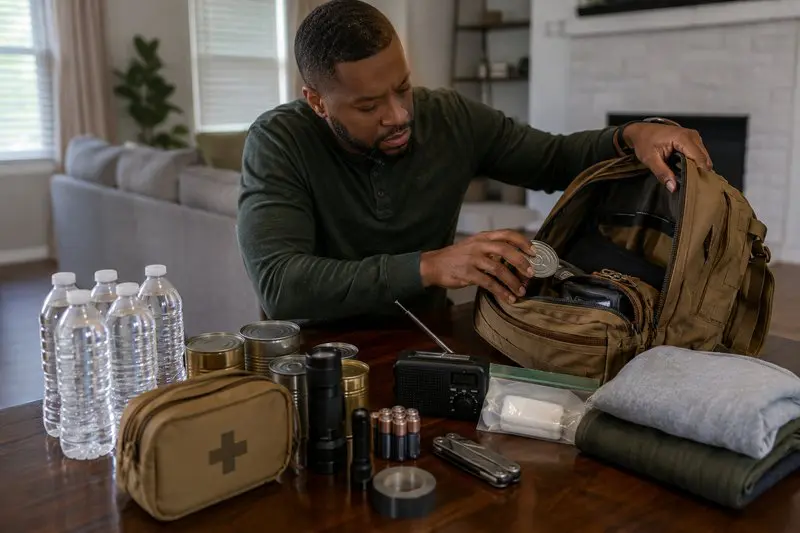
Take away the dramatic label, and you’re really talking about a well-stocked emergency kit: water, shelf-stable food, a first aid kit, a flashlight, and a dependable way to get information if cell service goes down.
Call it an apocalypse kit, a go-bag, a disaster supply kit, or whatever makes the most sense to you. The name isn’t what matters. What matters is having one ready when you need it.
What Real Emergencies Look Like
The difference between “apocalypse” and “emergency” mostly comes down to scale.
A full civilizational collapse is, at best, extremely unlikely. But extended power outages, severe storms, regional flooding, and fast-moving wildfires are much more common.
Major storms routinely knock out power for entire regions for several days at a time. Hurricanes can leave coastal and inland areas cut off for 48 to 72 hours or longer. Wildfires have forced rapid evacuations across large parts of the western U.S. with very little warning. Winter storms can strand households for days in places not built for prolonged cold. Each year, millions of families in the U.S. face at least one situation that tests how prepared they really are.
None of these events is world-ending. They’re just the kind of disruptions that turn a difficult few days into something much harder if you’re not ready for them.
FEMA consistently highlights the first 72 hours after a disaster as a critical window where self-reliance matters most. In widespread emergencies, first responders are stretched thin across many calls at once, and households that already have basic supplies help reduce pressure on the overall response. In that sense, building a solid emergency kit is really just practical planning.
What Goes Into a Practical Apocalypse Kit
Once you strip away the name and the hype, putting together an apocalypse kit is really just common sense organized into one place.
Water is the starting point. The standard guideline is one gallon per person per day for at least three days, covering both drinking water and basic hygiene. A compact water filtration bottle is a smart addition because it gives you flexibility if tap water isn’t available or runs out.
Next is food. You want non-perishable, calorie-dense, nutritious items that don’t require cooking or electricity. Energy bars, freeze-dried meals, canned proteins, and dried beans all work well. A good rule is to plan for at least three days of food per person in your household.
After that, it comes down to a few essentials:
- First aid kit with bandages, antiseptics, and any prescription medications your household depends on
- A battery-powered or hand-crank radio for emergency updates when your phone isn’t working
- A dependable flashlight, extra batteries, and a basic multi-tool
- Copies of IDs, insurance information, and emergency contacts all stored in a waterproof pouch
The goal is to have a kit you can grab quickly, carry easily, and trust to cover the basics when you need it most.
How Much Prep Is Actually Enough?
Emergency preparedness tends to fall along a wide spectrum, from having nothing set aside at all on one end to building an underground compound with years of supplies on the other. For most households, the practical answer sits somewhere in between.
A 72-hour baseline is designed to cover the most common situations, like short power outages, passing weather events, or brief evacuations. From there, extending your supplies to two weeks makes sense for households in areas that experience events such as hurricanes, earthquakes, or severe winter storms, where roads and supply chains can remain disrupted well beyond a long weekend.
Once you go beyond that point, your decisions should come down to your region, household size, and the amount of space you realistically have to store supplies. You can’t prepare for every possible scenario, but you can be ready for the kinds of emergencies that are actually likely where you live. Someone on the Gulf Coast plans with hurricane season in mind. Someone in the Pacific Northwest focuses more on earthquake readiness.
Keeping your kit aligned with your real risk profile helps keep the whole process practical and manageable. Most local emergency management agencies publish helpful, region-specific guidance that can be worth reviewing as you fine-tune your setup.
The Mindset Behind a Kit That Works
Practical preparedness and doomsday prepping often look surprisingly similar on paper. The same kinds of gear show up on both lists. What separates them is the mindset behind the decisions.
Doomsday prepping usually starts from a place of fear: the belief that systems are fragile, collapse is inevitable, and only those with large stockpiles will make it through. That way of thinking often leads to overbuying, unnecessary expense, and a constant sense of anxiety that doesn’t actually make someone more prepared for real-world disruptions.
Practical preparedness takes a different approach. It starts with confidence built through small, manageable steps that reduce stress when something goes wrong. A kit you can actually carry, supplies you rotate into normal use over time, and a simple plan your household understands all go a long way. Preparedness is really about confidence, and confidence doesn’t require a bunker.
When it’s built the right way, an emergency kit is just a set of tools that help your household stay functional when life gets disrupted. Being ready ahead of time isn’t about fear. It’s just practical confidence, plain and simple.
Prep for the Most Likely Scenario, Not the Scariest One
The apocalypse probably isn’t coming, but the next power outage, storm warning, or evacuation notice very well might be.
A practical emergency kit isn’t about preparing for the absolute worst-case scenario. It’s about not being caught off guard by situations that happen more often than people think.
Focus on emergency supplies that actually make a difference in real situations. That doesn’t mean extreme gear lists or doomsday framing, but straightforward basics that help keep your household ready when it matters.