Nuclear preparedness might sound like something for extreme preppers, not everyday families. But the Federal Emergency Management Agency (FEMA) offers specific guidance for nuclear emergencies, and the checklist it recommends is much more practical than most people expect.
A nuclear event could involve a power plant accident, a dirty bomb, or a nuclear detonation. The survival kit box you build for any of these situations shares a lot with a standard emergency kit, with a few targeted additions. This guide covers both.
Why Nuclear Prep Belongs in Any Emergency Plan
Nuclear incidents don’t require a wartime scenario to warrant preparation; indeed, some of the biggest nuclear events in our history aren’t linked to warfare at all.
The Fukushima Daiichi disaster in 2011 displaced hundreds of thousands of residents with little warning. The 1986 Chornobyl accident spread radioactive material across multiple countries.
In the U.S., nuclear power plants operate in more than 30 states, and federal law requires communities within certain distances to have emergency plans in place.
Radiological emergencies can also happen on a smaller scale. A dirty bomb doesn’t trigger a nuclear reaction. It spreads radioactive material and calls for the same basic response: shelter in place, protect your airways, and follow official guidance from FEMA or the National Weather Service.
The basic emergency response stays much the same across different scales. That keeps your kit consistent to build and practical to maintain.
What Goes in Your Survival Kit Box
A survival kit box for nuclear emergencies starts with the same basic supplies you’d keep in any household emergency kit, with water at the top of the list. Label the kit and keep it in the same spot. In a fast-moving emergency situation, you don’t want to spend 10 minutes trying to remember where you put the kit.
During a nuclear incident, outdoor water sources and municipal systems can become contaminated. Store at least 1 gallon of water per person per day for at least three days in sealed, food-grade containers. Don’t use tap water until officials give you the all-clear.
Non-perishable food follows the same logic. Sealed, shelf-stable items make the safest emergency food supplies when you can’t confirm what the outside air has touched. Stock enough for at least three days for every household member.
Communication gear matters even more during a nuclear emergency than it does in most situations. A hand-crank radio keeps you connected to emergency alerts without depending on power or cell networks. Your phone is also essential as a communication tool, and for the information it holds. Keep a portable charger in the kit and a fully charged backup power bank.
Finish off with a first-aid kit, extra batteries, flashlights, and copies of critical documents stored in a sealed plastic bag. Keep everything in a sturdy, lidded container you can grab quickly without digging through a closet.
Nuclear-Specific Additions
Once you have the basics covered, you can add a few items specifically for radiological emergencies.
Potassium iodide (KI) tablets protect your thyroid from absorbing radioactive iodine, which some nuclear events can release in significant amounts. The Food and Drug Administration (FDA) has approved KI for this purpose, and emergency management agencies recommend it for people in certain risk zones. KI doesn’t protect against every type of radiation, only radioactive iodine, and it works best when you take it before or shortly after exposure. Follow guidance from FEMA and your state’s emergency management agency on exact dosing and timing.
You can buy KI tablets without a prescription at most pharmacies. Some states also provide them free to residents who live near nuclear power plants. Check with your state emergency management agency for local availability before you need them.
N95 or higher-rated respirators can reduce your intake of radioactive particles if you have to move through potentially contaminated air. They can’t replace staying indoors, but they can still help when you have to go outside before officials clear the area.
Plastic sheeting and duct tape can help seal windows, doors, and vents in a room to keep outside air out. FEMA specifically recommends these materials for shelter-in-place situations. Keep enough on hand to cover at least one interior room without windows.
One more item worth adding: a clean change of clothes in a sealed plastic bag. Removing and bagging your outer clothing after possible outdoor exposure reduces contact with any particles you may have picked up. It’s an inexpensive step that can offer legitimate protection.
The First 24 Hours Matter Most
A well-stocked kit is only part of your emergency plan. The other part is knowing what to do when you actually need it.
Shelter in place is the primary directive during a nuclear emergency. Get inside, stay inside, and keep listening for official emergency alerts. Radiation from fallout drops significantly in the hours after a nuclear event. FEMA guidance notes that staying in the right location for the first 24 hours can dramatically reduce exposure compared with remaining outside or traveling to a second location.
Move to the most interior room available, with as few windows and exterior walls as possible. This could be your basement, interior storage room, or even a parking garage, depending on your property.
Close all windows, doors, and fireplace dampers. Turn off fans, air conditioners, and any ventilation systems that pull outside air indoors. Then use your hand-crank radio or phone to follow official updates and wait for further instructions.
But remember, your emergency kit provides the supplies you need to stay equipped and comfortable as you follow the official guidance. It doesn’t replace the guidance itself.
Build the Kit. Have a Plan.
Nuclear preparedness means having a plan in place before you need one, just like keeping a fire extinguisher nearby or knowing where to shut off the water. You hope you’ll never need it, but it’s there just in case.
Most of what you need in a nuclear emergency kit also belongs in a solid general emergency kit. The nuclear-specific additions cost relatively little and take up hardly any space. Being prepared doesn’t have to mean going overboard. A few basic supplies and a clear plan can make a difficult situation easier to handle if you’re ever faced with a nuclear incident.
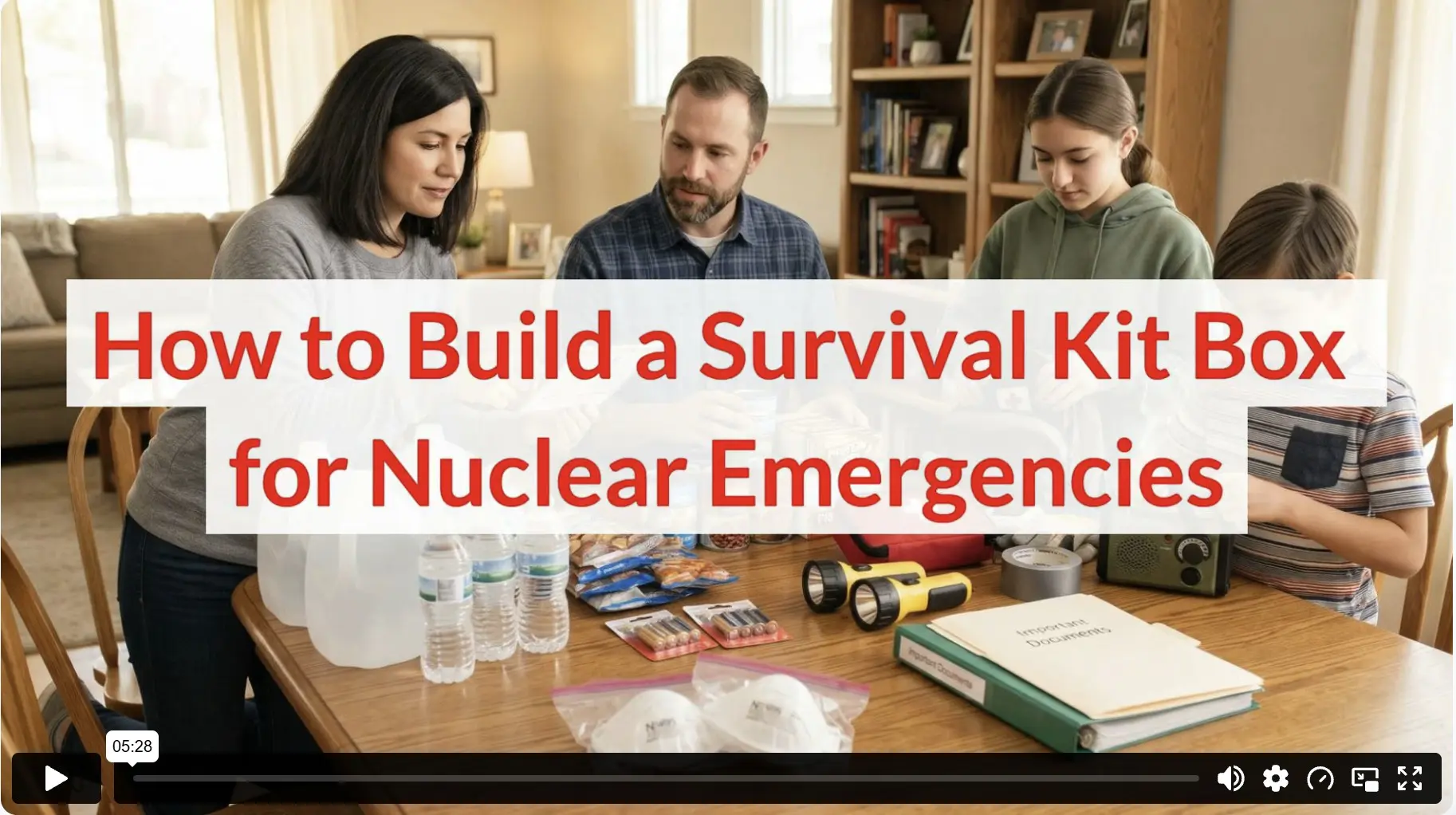
Video
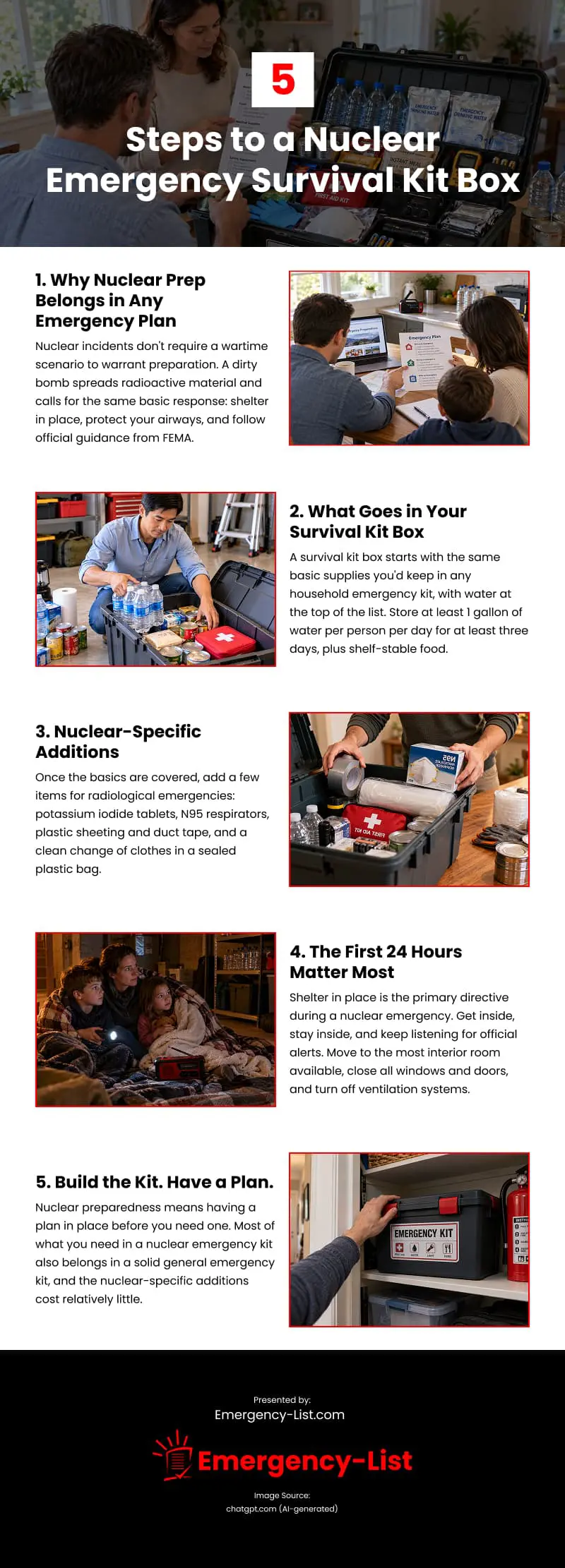
Infographic