Emergencies can create injuries quickly. Whether you trip and fall during a blackout or step on broken glass after a storm, an already stressful day can turn into an urgent medical situation.
The first few minutes after an injury accident matter. Keeping calm and taking swift action helps you protect yourself or another injured person, prevent the problem from worsening, and decide whether professional care is needed.
You do not need advanced medical training to handle many common injuries. You do need a clear head, basic supplies from an emergency survival first aid kit, and a simple understanding of what to do first.
1. Handle Cuts and Bleeding Quickly
Cuts are some of the most common injuries in emergencies. Broken glass, damaged metal, and splintered wood all pose risks when you are cleaning up or moving quickly.
When you have a cut to deal with, start by applying firm pressure with a clean cloth, gauze, or bandage. Keep that pressure steady for several minutes to slow or stop the bleeding.
Next, rinse the wound with clean water, using some of your emergency water supply if needed. If you can do so safely and gently, remove visible dirt, then cover the area with a clean dressing or bandage. If blood soaks through, add another layer on top instead of pulling the first one away, as removing it can restart any bleeding.
A deep wound may need medical attention, especially if bleeding will not stop or dirt remains trapped inside. If the cut came from a rusty nail or dirty debris, keep tetanus risk in mind and follow up with a medical provider when possible.
2. Cool Burns and Protect the Skin
Burns are a risk in emergencies when people cook without power or use candles and portable heaters. If you get a minor burn, run it under water for several minutes. This helps reduce skin damage and eases pain. Use cool water, not ice; ice can further damage already injured skin.
After cooling the burn, cover it loosely with a clean, nonstick dressing or cloth. Keep the area clean and avoid home remedies such as butter, oils, and toothpaste, as they offer no medical benefit and will likely make the wound worse.
If you’re dealing with a large burn, a deep burn, or a burn on the face or hands, get prompt medical evaluation. If clothing sticks to the burn, do not pull it off; protect the area and seek help.
3. Support Sprains, Strains, and Minor Falls
It’s common to twist ankles or strain muscles in emergency situations like evacuations, power outages, or storm cleanup.
If a sprain, strain, or minor fall happens, the first goal is to reduce movement and swelling. You should rest the area and avoid putting weight on it right away.
A simple approach works best for these simple injuries. In addition to resting the area, apply a cold pack wrapped in cloth, use light compression if needed, and raise the area if possible.
If the pain is severe or the person cannot bear weight at all, there may be a more serious injury involved, like a fracture. In this circumstance, keep the limb as still as possible and seek medical help.
4. Respond to Head Bumps Carefully
Head injuries deserve close attention even when they appear insignificant.
If someone bumps their head, have them rest and watch for symptoms. A mild headache may pass, but confusion, vomiting, worsening pain, unusual drowsiness, or trouble speaking are strong warning signs that you should seek immediate medical attention.
You should use a cold pack wrapped in cloth on a minor bump to reduce swelling. Try to keep the person calm, and avoid more activity until you are confident they feel steady. If the injured person loses consciousness, even for only a few moments, take that seriously.
Children and older adults may not describe symptoms clearly, so close observation is especially important in their cases. If something feels off, trust your instinct and get a professional evaluation.
5. Treat Blisters and Scrapes Before They Grow Worse
Long walks and wet shoes mean blisters and scrapes are common during emergencies. These injuries seem minor, but they can become painful and infected if you ignore them. Clean scrapes with safe water, remove loose dirt, and cover the area with a bandage from your emergency supply kit.
For blisters, protect the skin if the blister is still closed, and do not try to pop it with a pin or needle. A moleskin pad or clean bandage can reduce friction. If a blister opens on its own, clean it gently and cover it. Your goal is to keep dirt out and protect the skin while it heals.
When you need to move quickly after an emergency, a painful foot blister can slow you down. When you have supplies on hand to treat these simple injuries, you’ll be prepared to stay on your feet and stop them from becoming serious.
6. Watch for Heat Exhaustion and Dehydration
Heat exhaustion is a minor injury that can sneak up on you in an emergency. Emergencies often push you outdoors, into long cleanup sessions with too little water and a lot of physical effort.
Heat exhaustion can build gradually. You may notice heavy sweating, then weakness, dizziness, nausea, or a headache.
You should stop what you are doing and move to a cooler place.
Sip water slowly and use cool cloths on the neck or arms. Rest until the body settles down. If symptoms worsen or the person becomes confused or stops sweating despite extreme heat, you may be dealing with heat stroke. That is a medical emergency, and you should immediately seek further advice and treatment.
Keep a Practical First Aid Mindset
First aid during emergencies should be simple and steady. Stop bleeding. Cool the burn. Clean the wound. Reduce movement. Watch for warning signs. Those basic actions go a long way in keeping everyone safe and healthy.
You can also help yourself by keeping your first aid supplies organized and easy to reach. A kit buried under boxes won’t help much in a stressful moment when you need it quickly. Keep one at home, one in your car, and one in a go-bag if you travel often or live in an area with frequent storms or outages.
Not every injury requires a dramatic response; the most common ones are easily handled with a clear plan and proper preparation.
Video
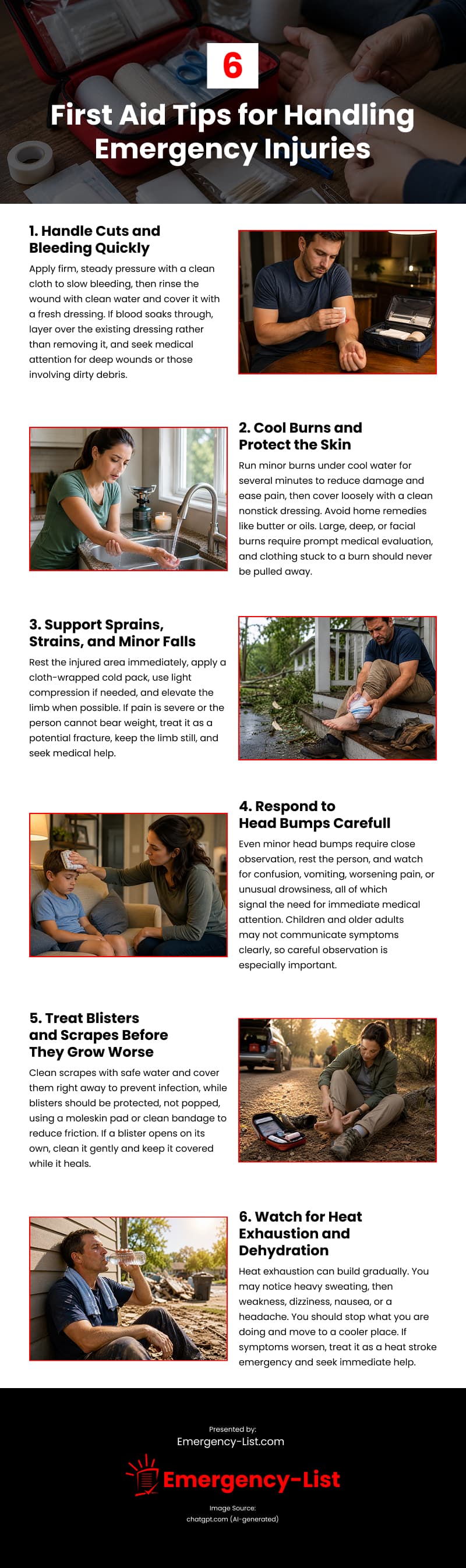
Infographic
Handling common injuries confidently during an emergency does not require advanced training; it requires the right supplies, a calm approach, and knowing what to do first. Check out six first aid tips for handling emergency injuries in this infographic.