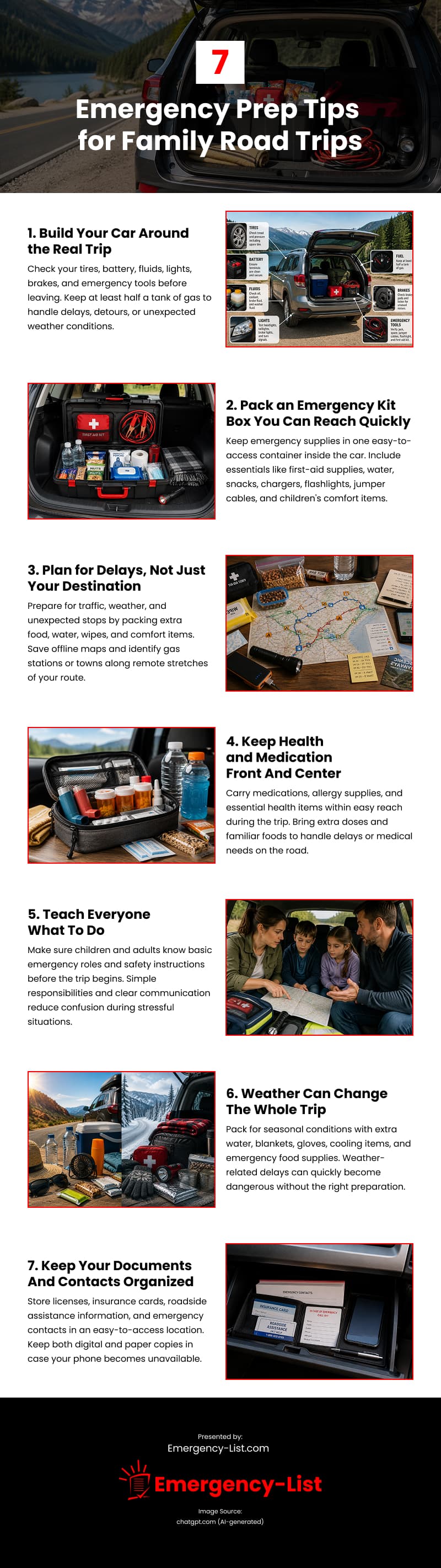
Taking your family on a road trip means a whole heap of planning: packing the car, checking routes, making the trip itinerary, and preparing for the things you hope will never happen.
You don’t want a flat tire, but you travel with a spare. You hope that you sail along open roads, but you listen to the traffic reports just in case. And you really don’t want anyone to get sick or hurt, but you still have a first-aid kit in the glove box.
A family road trip runs better when you prepare for the “maybes” or “what ifs” that could crop up. A little prior planning gives you more control over situations and helps you handle any problems without panic.
Proper preparation will keep you on schedule, on budget, and comfortable. You won’t find yourself making rash decisions when people are tired, hungry, or stuck in an unfamiliar place. Good road trip preparation is a practical and sensible choice.
1. Build Your Car Around the Real Trip
The first part of preparing for a road trip is your vehicle. If it needs any attention, handle it before you go on your trip. Check the tires, including the spare. Make sure your jack and tools are in place. Test the battery; pack jump leads if you don’t have them. Finally, top off any fluids and check that lights, wipers, and brakes are working as they should.
These simple checks are important because problems aren’t easy to fix when you’re on the road. Something that you can put up with when you’re driving locally and know the area can be a huge problem when you’re miles away from home. Your car doesn’t need a full mechanical check before a long trip, but properly setting it up before you set off is essential.
When you’re on the road, keep your gas tank within a safer range than your daily driving. Try to keep at least half a tank as a baseline; this will position you to respond better to changing weather or traffic conditions. If you have to divert due to an accident or get stuck in a highway closure, that extra fuel becomes part of your emergency plan.
2. Pack an Emergency Kit Box You Can Reach Quickly
Your family road trip emergency kit box should be simple, visible, and easy to use.
If your flashlight is trapped, buried under suitcases and snack bags, it won’t help you. You should pack the core items into one container and keep it easily accessible in your car’s cabin.
Essential items your kit should include are: a first-aid kit, bottled water, non-perishable snacks, a flashlight, phone charging cables, a portable power bank, basic tools, jumper cables, a reflective vest, and emergency contact information.
If you are traveling with children, add the items that keep them stable and comfortable during a delay. Diapers, wipes, medications, and a change of clothes matter just as much as roadside gear when your family is stranded for hours.
3. Plan for Delays, Not Just Your Destination
Many families prepare for their departure and arrival, but forget about the middle. The middle is where most road trip stress lives. Traffic jams, missed exits, weather slowdowns, and long restroom gaps can wear everyone down and make tempers flare, especially if you are running on a tight schedule.
Pack extra water and more snacks than you think you need; you’ll be thankful for the emergency food supplies if you get delayed. Keep one small bag of essentials in the front seat or within arm’s reach. Include tissues, hand sanitizer, wet wipes, paper towels, and a few comfort items for younger children. A familiar toy or blanket can settle a rough stretch of the drive faster than a long explanation.
It also helps to plan a backup route. Check the weather before you leave. Look at major construction zones. Save offline maps in case your signal drops. If you are driving through remote areas, note where the last large gas station or town sits before a long stretch of road.
A family road trip will be smoother if you don’t assume every service will be available exactly when you want it.
4. Keep Health and Medication Front And Center
Health problems on the road can escalate quickly because you are away from your usual setup. Pack all medications in a bag that stays with you, not in luggage you may struggle to reach. Bring more than the exact amount you need in case the trip runs long.
If someone in your family has allergies, asthma, or another medical condition, plan your trip around this. Carry the supplies you rely on at home and keep them easy to grab. That includes inhalers, glucose tablets, motion sickness medicine, pain relievers, and any prescription medication you cannot afford to lose track of.
Now is also a good time to consider practical food choices for your journey. Road trip meals often lean toward convenience, which isn’t always suitable if someone in your family has dietary intolerances or medical conditions that food can affect. Keep a few stable, familiar foods on hand.
Crackers, protein bars, fruit pouches, and electrolyte drinks can help you recover from a rough travel stretch without needing to hunt for the next open store.
5. Teach Everyone What To Do
A family road trip is safer when everyone understands the basics. Children do not need a full emergency briefing, but they should know what to do if the car stops on the side of the road, if their phone dies, or if they get separated at a rest stop.
Give them simple, clear instructions. Stay near the car unless you are told otherwise. Know which adult to follow. Memorize one phone number if age allows. Older kids can help with useful tasks like holding a flashlight or reading signs while you focus on driving or handling a stop.
Adults need clarity, too. If you are traveling with a partner or another family member, decide who will handle navigation, who will check messages, and who will manage children during an unexpected stop.
Making small role decisions in advance reduces confusion when you are tired or under pressure.
6. Weather Can Change The Whole Trip
Road trip emergencies are often weather emergencies in disguise.
Summer heat can make a breakdown dangerous, especially for young children, older adults, and pets. Winter travel can leave you stuck in freezing conditions much longer than expected. Heavy rain can change visibility and road traction quickly.
Pack for your trip with the season in mind. In hot weather, carry extra water, sun protection, and cooling items. In cold weather, bring blankets, gloves, and spare layers for everyone in the car. Even a short roadside delay feels much longer when someone is shivering or overheated.
Don’t forget about food to tide you over in a delay. A food survival kit for a family of four might include 8-12 of the following:
- Bottles of water
- Granola bars
- Tuna pouches (or servings of beef jerky)
- Bags of trail mix or more if your family is larger, just in case your delay is lengthy.
Make sure to rotate your food every six months.
7. Keep Your Documents And Contacts Organized
You do not need to travel with a thick folder of paperwork, but you should know where your important information is. Carry your license, registration, and insurance card in an easy-to-reach spot. Save roadside assistance details in your phone and keep a written backup in your glove compartment.
It also helps to have a single note with emergency contacts, key medical details, and your lodging information if the trip includes overnight stops. If your phone is damaged or dead, that paper copy keeps useful information in your hands.
End With A Safer Mindset
A smooth family road trip comes down to simple preparations.
Check the car. Pack for delays. Keep health aids close. Prepare for weather and low-signal stretches. Give everyone a basic plan. These simple steps make your trip safer and steadier.
You are not trying to predict every problem. But you are giving yourself room to respond well when something changes. That is what good emergency preparation does; it keeps your family moving, protected, and far less likely to let a single bad moment spoil everything.
Video
Infographic
A fun family road trip can turn stressful the moment something goes wrong, far from home. This infographic shares seven emergency prep tips to help keep your crew safe, calm, and ready for the unexpected.